Play with purpose
Children investigate, imagine, negotiate and build understanding through meaningful play.
 Admissions
 How young children learn
Learning is active, joyful and connected to real life. Children investigate questions, make choices, test theories, create, communicate and reflect.
Book a campus visit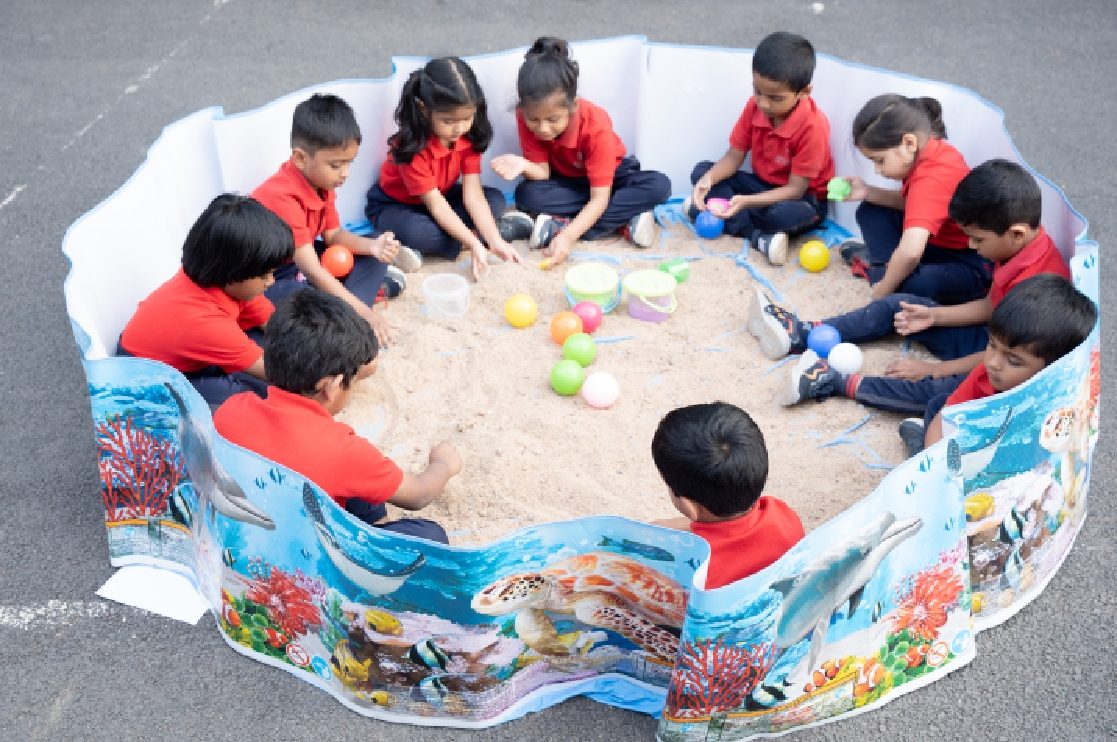
Children investigate, imagine, negotiate and build understanding through meaningful play.
Curiosity leads to observation, conversation, experimentation and new connections.
Educators document, reflect on and extend each child’s ideas, strengths and progress.
Trust, belonging, collaboration and empathy create the conditions for learning.
Primary Years Programme · Early Years
For ages 3-6, the PYP places the child at the centre of a transdisciplinary learning journey.
Central ideas and lines of inquiry help children connect language, mathematics, science, the arts, wellbeing and social understanding. Educators guide inquiry while children exercise voice, choice and ownership.
Skill Stork Early Learning School is a Candidate School for the Primary Years Programme and is pursuing authorization as an IB World School. Candidate status gives no guarantee that authorization will be granted.
A journey of discovery and growth
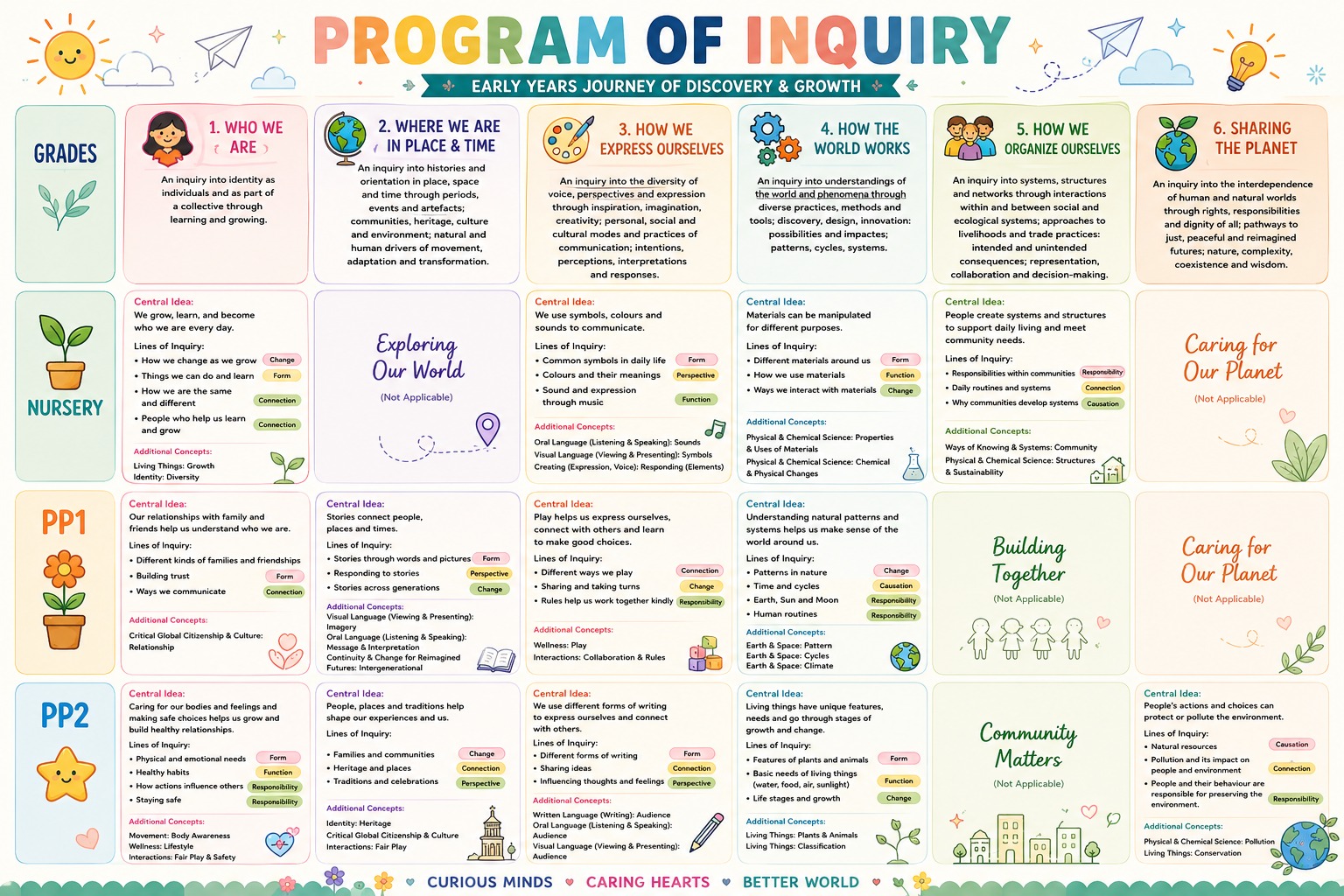
Our Nursery, PP-1 and PP-2 Programme of Inquiry maps age-appropriate central ideas, concepts and learning connections across the year.
From wondering to action
Inquiry is carefully calibrated to children’s language, experience and independence. It is never a miniature version of older-school learning.
Children explore through their senses, talk about what they observe and represent ideas through play, movement and drawing.
Children gather information, notice patterns, listen to other perspectives and test ideas together.
Children use growing literacy and mathematics to communicate understanding, make decisions and take meaningful action.
Five connected domains
Children do not experience development in separate boxes. Every thoughtfully planned experience supports several domains at once.
Thinking, memory, investigation and problem-solving
Listening, speaking, early literacy and expression
Belonging, empathy, confidence and self-regulation
Fine motor, gross motor, balance and coordination
Independence, routines, self-care and decision-making
Stories, conversations, rhyme, mark-making, reading and many ways to communicate.
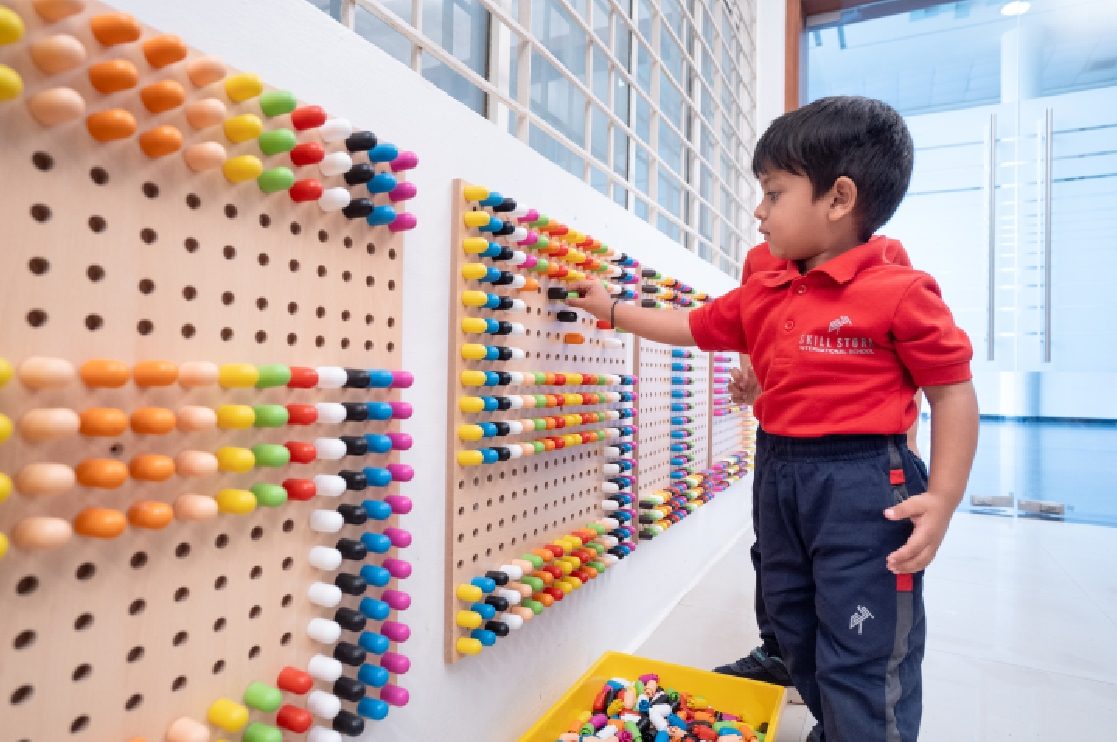
Pattern, number, space, measure and reasoning discovered through real experiences.
Building, testing, observing and solving through science, technology, engineering, arts and mathematics.
Painting, making, music, movement, dance, drama and open-ended expression.
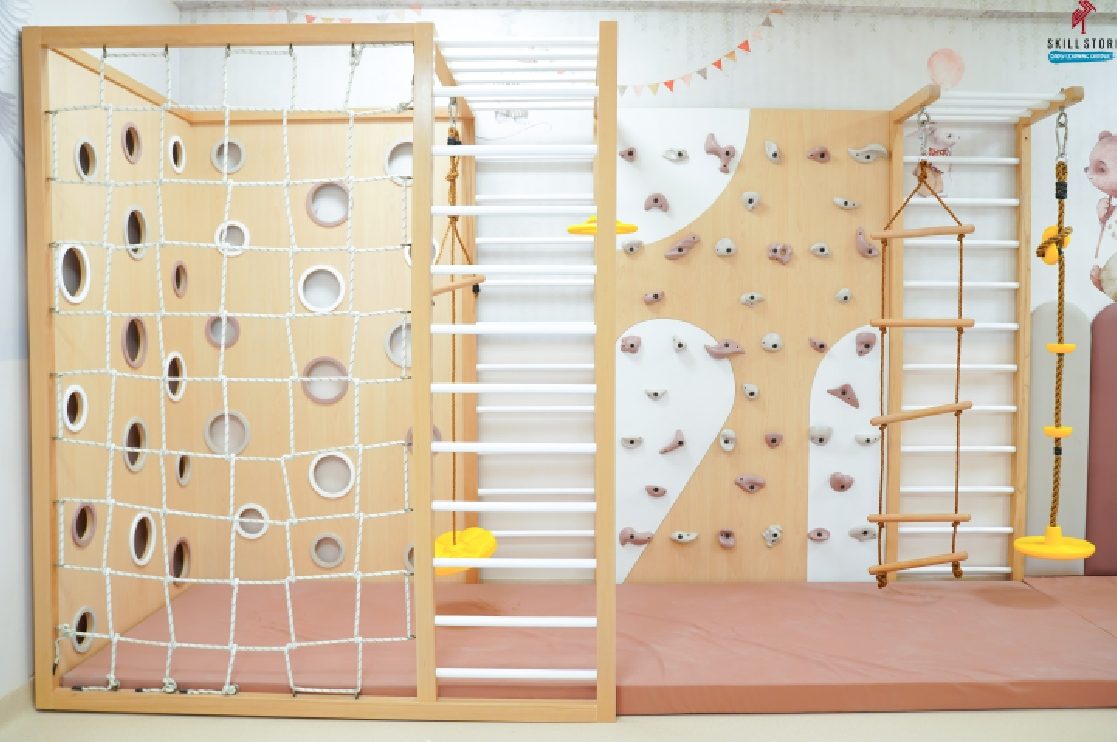
Outdoor exploration, swimming, movement challenges, sport and confident risk-taking.
Sand, water, clay, light, texture, loose parts and delightfully messy discovery.
Observation, documentation and reflection
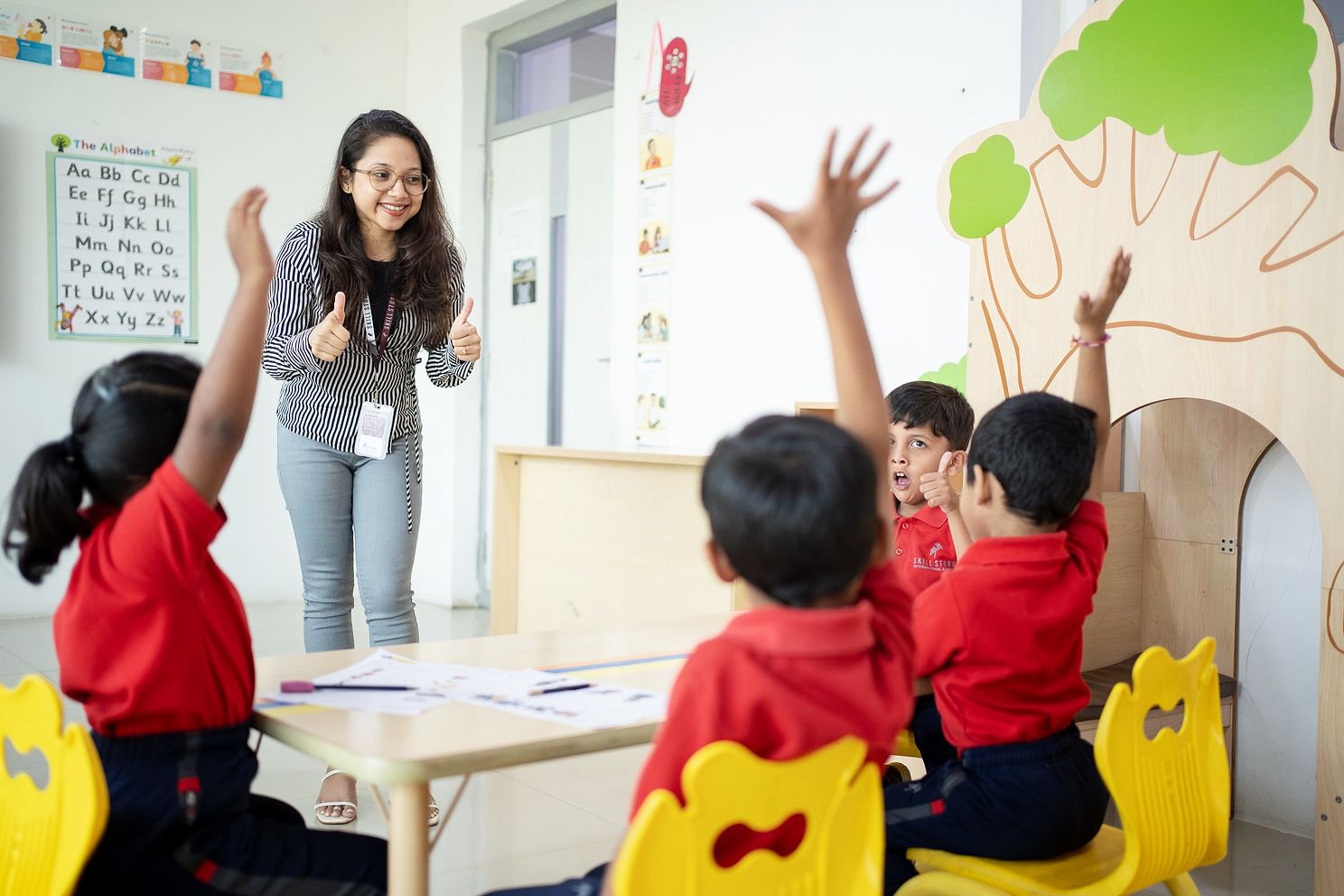
Educators observe children closely, document significant moments, reflect with colleagues and plan meaningful next steps. Families receive everyday updates, monthly newsletters, Unit of Inquiry communication and regular conferences.
Come and experience it
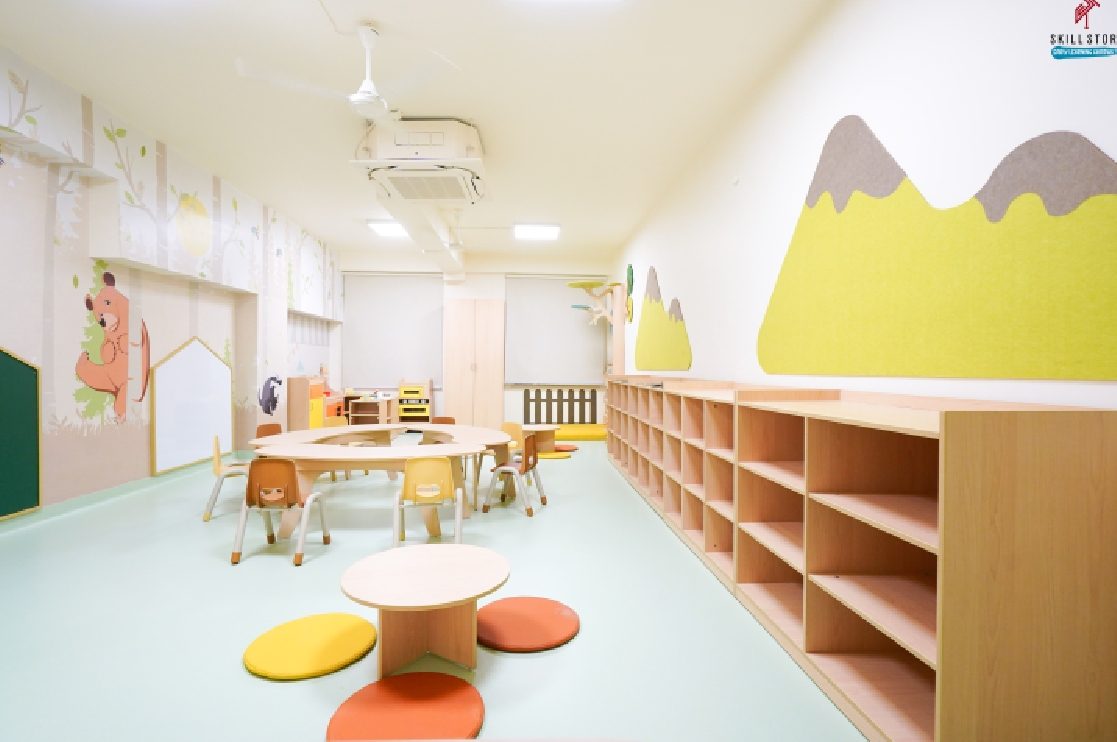
Meet our educators, explore the learning spaces and experience the calm, joyful rhythm of a Skill Stork day.